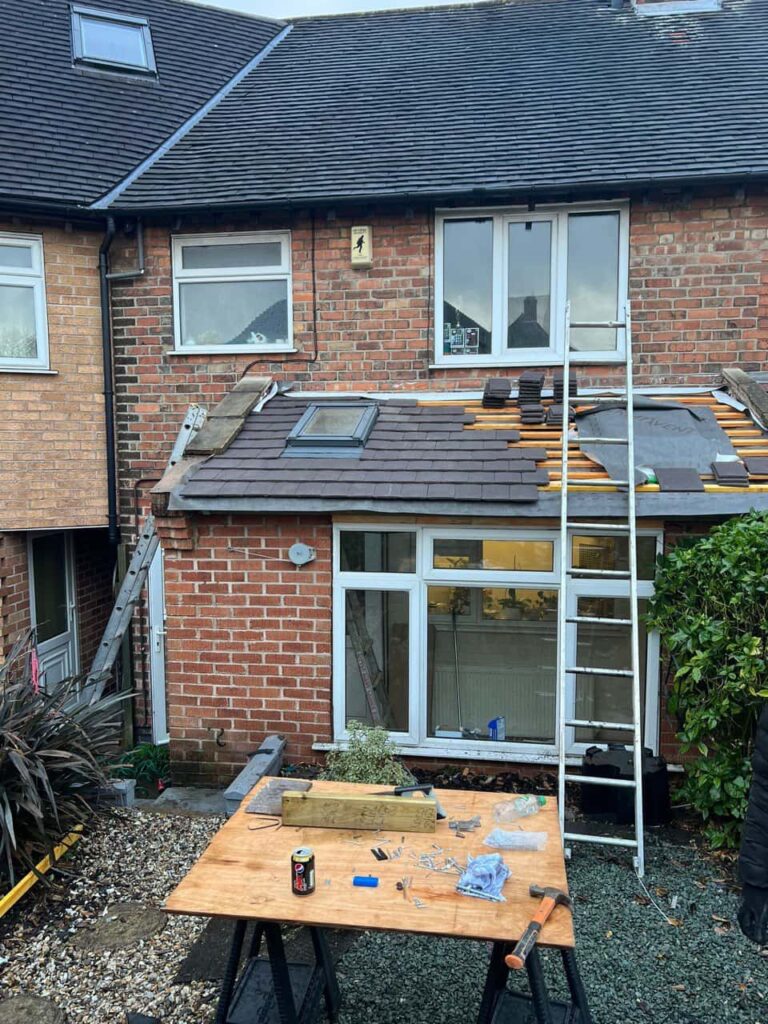
One missing roof tile may appear to be a small, isolated defect. However, tiles form part of an overlapping system designed to direct rainwater down the roof while protecting the underlay, battens and structure beneath.
When a tile is missing, that system is interrupted. The roof may not begin leaking immediately, particularly if the underlay remains intact, but continued exposure can allow moisture and wind to affect a much wider area. Prompt inspection helps contain the problem before hidden components begin to deteriorate.
How a Single Missing Tile Can Affect the Wider Roof
The extent of the damage depends on the position of the missing tile, the condition of the underlay and the length of time the opening remains exposed. Weather conditions and the state of neighbouring materials also influence how quickly the problem develops.
Rainwater Can Reach the Underlay
Roof tiles provide the main defence against rainfall. Once one is missing, water can fall directly onto the membrane beneath the covering.
Underlay offers secondary protection, but it is not intended to remain exposed indefinitely. Older material may already be brittle, torn or sagging. If water passes through it, the battens, insulation and roof timbers may become damp.
The opening may therefore affect materials that cannot be seen from ground level.
Wind-Driven Rain Can Travel Beyond the Gap
Rain does not always move straight down a roof. During windy conditions, it can be forced sideways or upwards beneath adjoining tiles.
Water entering through one opening may travel along the underlay or battens before dripping into the roof space. As a result, an internal damp mark can appear some distance from the missing tile.
This movement can make the source difficult to identify without examining both the exterior covering and the roof space.
Neighbouring Tiles Become More Vulnerable
A missing tile exposes the edges of those around it. Wind can get beneath these edges and place additional pressure on their fixings.
If adjacent tiles are already loose or their nails and clips have deteriorated, they may begin to lift or slip. One missing tile can then develop into a larger exposed section, particularly during strong winds.
Replacing the original tile and checking those nearby helps restore the continuous arrangement that supports the covering.
Battens Can Weaken When They Stay Damp
Timber battens support the tiles and provide fixing points. Repeated wetting may gradually weaken them, particularly if they cannot dry properly between periods of rain.
A replacement tile will not remain secure if the batten beneath it has deteriorated. The affected area should therefore be inspected before a new tile is fixed into position.
If dampness has spread along the batten, the necessary repair may extend beyond the original opening.
Moisture Can Affect Insulation and Internal Finishes
Once water reaches the roof space, it may soak into insulation or travel towards ceilings and walls. Early signs can include:
- Dark marks on accessible timbers
- Damp or compressed insulation
- Brown staining on ceilings
- Peeling paint
- A musty smell in the roof space
- Drips during prolonged rainfall
- Dampness near an adjoining wall
Internal symptoms may not appear until the roof has been exposed several times. The absence of a ceiling stain does not necessarily mean that no water has entered.
The Tile May Be Missing Because of a Wider Defect
It is important to determine why the tile became detached. Possible causes include a failed fixing, a weakened batten, damage around the fixing hole or movement in the surrounding roof.
If one tile has failed because the fixings are deteriorating generally, other tiles may also be vulnerable. Replacing the visible gap alone could leave the underlying problem untreated.
A professional assessment should check whether the incident is genuinely isolated or part of a wider pattern.
Location Influences the Level of Risk
A missing tile near a ridge, verge, valley, chimney or roof junction may create particular problems. These areas receive concentrated water flow or greater wind pressure and rely on several components working together.
Water entering near a junction may affect flashing, mortar and adjoining sections of underlay. The repair should consider the complete detail rather than treating only the empty tile position.
Temporary Covering Is Not a Permanent Repair
A temporary measure may reduce immediate exposure, but it does not restore the roof’s intended overlap or fixing system. Materials applied from the outside can also conceal damage or interfere with the proper fitting of a replacement tile.
A lasting repair should reinstate the correct tile, secure it appropriately and check the condition of the surrounding covering and hidden supports.
What a Professional Inspection Should Establish
An effective inspection should determine:
- Why the tile became detached
- Whether the underlay has been exposed or torn
- Whether battens remain sound
- If neighbouring tiles are secure
- Whether water has entered the roof space
- If the defect affects a nearby junction
- Whether the damage is localised or more extensive
This prevents a small repair from overlooking deterioration that has already begun beneath the surface.
Acting Early Helps Contain the Damage
A newly missing tile can often be resolved through a straightforward repair when the underlay, battens and surrounding tiles remain sound. The scope of work may increase after prolonged exposure because more components can become affected.
Early attention is therefore less about the size of the visible gap and more about protecting the roof system beneath it.
Conclusion
One missing tile can lead to wider roof damage if rain reaches the underlay, battens, insulation or internal structure. It can also leave neighbouring tiles more vulnerable to wind and allow moisture to travel away from the original opening.
The damage is more likely to remain localised when the tile is replaced promptly and the surrounding area is properly inspected. If you have noticed a missing tile in Carterton, Oxfordshire, LJ Roofing Carterton can identify the cause, assess any connected damage and recommend an appropriate repair. Contact the team to arrange a professional roof assessment.
Call us on: 01993 463 479
Click here to find out more about LJ Roofing Carterton
Click here to complete our contact form and see how we can help with your roofing needs.