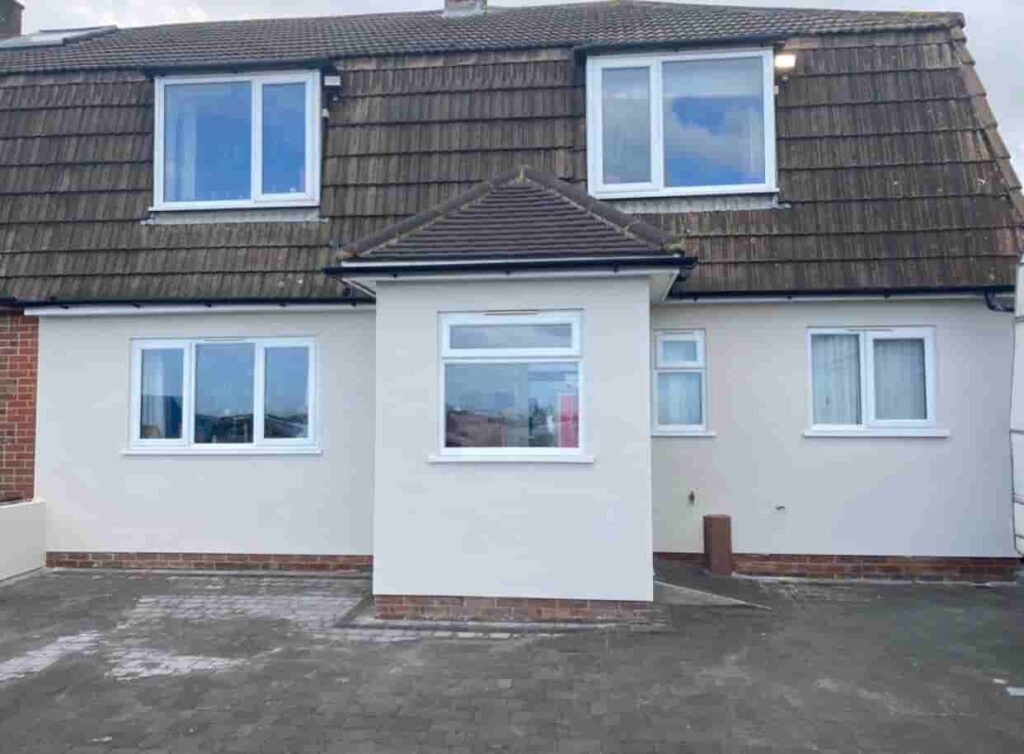
Why Prompt Attention to Roof Damage Matters
A small roofing defect may not appear urgent when there is no active leak or obvious internal damage. However, roofs function as complete systems, with tiles, underlay, battens, flashing and drainage components working together to keep water away from the structure.
When one element fails, continued exposure to rain and wind can affect surrounding materials. For property owners in Carterton, Oxfordshire, arranging timely roof repairs can help contain the original defect before it develops into a wider problem.
Water Can Spread Beyond the Original Defect
A cracked tile, lifted flashing or damaged flat roof covering can create a narrow route for rainwater to enter. Once beneath the external surface, moisture may travel along underlay, timbers or other concealed materials.
The internal damp patch may therefore appear some distance from the original opening. Delaying the repair gives water more time to spread, making the source harder to identify and increasing the number of affected components.
Roofing Underlay May Deteriorate
Underlay provides secondary protection beneath tiles or slates. It helps direct small amounts of wind-driven rain towards the roof edge when the external covering does not provide a complete barrier.
Persistent moisture can weaken, tear or cause older underlay to sag. Once this layer is compromised, water has a clearer route into the loft and may begin affecting insulation, ceilings and roof timbers.
Replacing one damaged tile may no longer be sufficient if the materials beneath it have already deteriorated.
Timber Battens and Roof Structures Can Become Damp
Roofing battens support tiles and provide fixing points across the roof slope. Rafters and other structural timbers support the wider roof assembly.
Ongoing water ingress may leave these materials damp for prolonged periods. Warning signs can include:
- Dark staining on timber
- A persistent musty smell
- Dampness within the loft
- Rusting or weakened fixings
- Localised movement in the roof covering
- Visible mould or fungal growth
Prompt repairs help limit moisture exposure before concealed timber components are affected more extensively.
Insulation Can Lose Effectiveness
Roof insulation is designed to retain trapped air. If it becomes wet, compressed or contaminated, its performance can decline.
Moisture may also remain within insulation after the visible leak has stopped, creating damp conditions around nearby materials. Where safe access is available, affected insulation and surrounding areas should be inspected as part of the roof assessment rather than concentrating only on the external covering.
Ceiling and Wall Damage May Develop
An untreated roof leak can eventually become visible inside the property. Early signs may include a faint ceiling mark, bubbling paint or a patch that darkens after rainfall.
As moisture continues to enter, it may lead to:
- Peeling finishes
- Damaged plaster
- Expanding stains
- Damp wall surfaces
- Dripping water
- A bulging or unstable ceiling
Do not stand beneath a ceiling that appears swollen or heavily saturated. Keep the area clear and arrange professional attention.
One Loose Tile Can Affect Nearby Tiles
Tiles and slates overlap to direct water down the roof. When one becomes cracked, loose or displaced, it can interrupt this arrangement and expose the surrounding area.
Wind may enter beneath the opening and place additional pressure on neighbouring tiles. What began as a single displaced component can therefore develop into a larger section requiring repair.
Early intervention helps restore the continuity of the roof covering before further movement occurs.
Flashing Defects Can Become More Extensive
Lead flashing protects vulnerable junctions around chimneys, walls and roof penetrations. Small splits or lifted edges may initially allow water through only during particular weather conditions.
Repeated movement and water penetration can enlarge the defect or affect nearby mortar and roofing materials. Surface sealants may temporarily conceal the opening without accommodating the natural expansion and contraction of the lead.
A professional repair should address why the flashing has failed as well as the visible split.
Drainage Problems Can Damage the Roofline
Blocked gutters, valleys and outlets prevent water from leaving the roof efficiently. Overflow may repeatedly soak fascias, soffits, wall surfaces and the edges of the roof covering.
Standing water can also find its way beneath tiles or into small joints. Clearing the blockage may be straightforward when addressed early, but prolonged overflow can lead to deterioration across several connected roofline components.
Minor Repairs Can Become Wider Roofing Work
A localised defect is usually easier to isolate while surrounding materials remain sound. If water is allowed to spread, repair work may need to include underlay, battens, insulation, internal finishes or neighbouring sections of the covering.
This does not mean every small defect will cause major deterioration. It does mean that the condition cannot be judged accurately from ground level or by the size of the internal stain alone.
Damage May Remain Hidden for Some Time
Roof problems do not always create immediate dripping. Insulation may absorb moisture, underlay may temporarily redirect water, and timber can become damp before clear internal signs appear.
Subtle warnings include:
- Musty smells in the loft
- Small ceiling stains
- Damp insulation
- Loose or uneven tiles
- Debris in gutters
- Repeated marks after rainfall
- Daylight visible through the roof
These symptoms justify investigation even if the property remains dry during lighter rain.
Temporary Patching May Not Address the Cause
Repeatedly applying sealant or patching the visible area can hide the defect without resolving it. Water may continue entering through failed flashing, damaged underlay or another opening further up the roof slope.
Accurate diagnosis should consider the full route taken by the water and the condition of surrounding materials. This reduces the likelihood of the leak returning after work is completed.
When Should You Contact a Roofer?
Arrange an assessment promptly if you notice missing tiles, active water ingress, damaged flashing, loose roof materials or moisture near electrical fittings. Recurring leaks, spreading ceiling marks and visible roof movement also require professional attention.
Avoid climbing onto the roof yourself. Wet, damaged or weathered coverings can be unsafe and may deteriorate further underfoot.
Conclusion
Delaying essential roof repairs can allow water to spread beyond the original defect, affecting underlay, battens, insulation, timbers and internal finishes. Loose components may also place neighbouring parts of the roof under additional pressure.
If you have noticed signs of roof damage in Carterton, Oxfordshire, LJ Roofing Carterton can inspect the affected area and identify the underlying cause. Prompt professional attention can help keep a manageable defect from becoming a wider roofing problem.
Call us on: 01993 463 479
Click here to find out more about LJ Roofing Carterton
Click here to complete our contact form and see how we can help with your roofing needs.